

คนแต่ละเชื้อชาติมักมีโครงสร้างของผิวหนังที่แตกต่างกัน ซึ่งพบว่ามีความสัมพันธ์กับภาวะผิวแพ้ง่าย โดยมีรายงานว่า คนกลุ่ม Caucasians จะมีความไวต่อสาร capsaicin สูงที่สุด รองลงมาคือ คนเอเชีย และต่ำสุดในคนผิวดำ เนื่องจากมีผิวหนังบางที่สุด จึงมีแนวโน้มจะเกิดผิวแดงได้มากกว่า รวมทั้งการตอบสนองของหลอดเลือดใต้ผิวหนังต่อการกระตุ้น ที่ว่องไวต่อการเกิดปฏิกิริยามากกว่า จึงเกิดผิวแดงได้มากกว่าคนเอเชียและคนผิวดำ (Duarte et al., 2017)
ภาวะผิวแพ้ง่ายมักพบในเพศหญิงมากกว่าเพศชาย ซึ่งอาจมีสาเหตุจาก ความหนาของผิวหนังในเพศหญิงที่น้อยกว่าเพศชาย (Duarte et al., 2017) รวมถึงปัจจัยด้านฮอร์โมน ที่มีผลต่อระดับความชุ่มชื้นของผิวหนังในช่วงที่มีรอบเดือนผิวหนังมักมีความไวต่อการกระตุ้นมากกว่าภาวะปกติ (Itsekson et al., 2004) นอกจากนี้เพศหญิงยังมีอัตราการใช้เครื่องสำอางที่สูงกว่าเพศชาย จึงพบรายงานการเกิดผิวหนังอักเสบและระคายเคืองได้มากกว่า
งานวิจัยพบว่า วัยหนุ่มสาวมีแนวโน้มเกิดภาวะผิวบอบบางแพ้ง่ายมากกว่า เนื่องจากมีการสัมผัสกับเครื่องสำอางและผลิตภัณฑ์สกินแคร์ค่อนข้างมากกว่าไวอื่น ๆ รวมทั้งมีปัจจัยด้านฮอร์โมนในเพศหญิงเป็นปัจจัยกระตุ้น ในขณะที่ผู้สูงอายุ แม้จะมีการเปลี่ยนแปลงของโครงสร้างผิวหนัง มีผิวหนังที่บางลง ซึ่งส่งผลให้เกิดผิวบอบบางแพ้ง่าย แต่กลับพบว่ามีอุบัติการณ์การเกิดผิวแพ้ง่ายน้อยกว่า ซึ่งอาจเกิดจากความไวต่อการสัมผัสที่ลดลงตามอายุด้วย ส่งผลให้การตอบสนองของผิวหนังต่อสิ่งกระตุ้นลดลง (Duarte et al., 2017; Farage et al., 2014)
บริเวณผิวหนังที่มักพบการระคายเคืองได้บ่อยที่สุด คือ ผิวบริเวณใบหน้า โดยเฉพาะบริเวณ ร่องแก้ม (nasolabial fold) (Duarte et al., 2017) เนื่องจากมี ปลายประสาทรับความรู้สึกจำนวนมากเมื่อเทียบกับผิวส่วนอื่นของร่างกาย นอกจากนี้ ยังเป็นบริเวณที่มีการใช้ผลิตภัณฑ์เครื่องสำอางมากกว่าส่วนอื่นของร่างกายอีกด้วย
บริเวณอื่น ๆ ที่มีรายงานพบการระคายจากภาวะผิวแพ้ง่าย ได้แก่ ผิวท้องแขน ฝ่ามือ ผิวบริเวณอวัยวะเพศ และ หนังศีรษะ (Duarte et al., 2017)
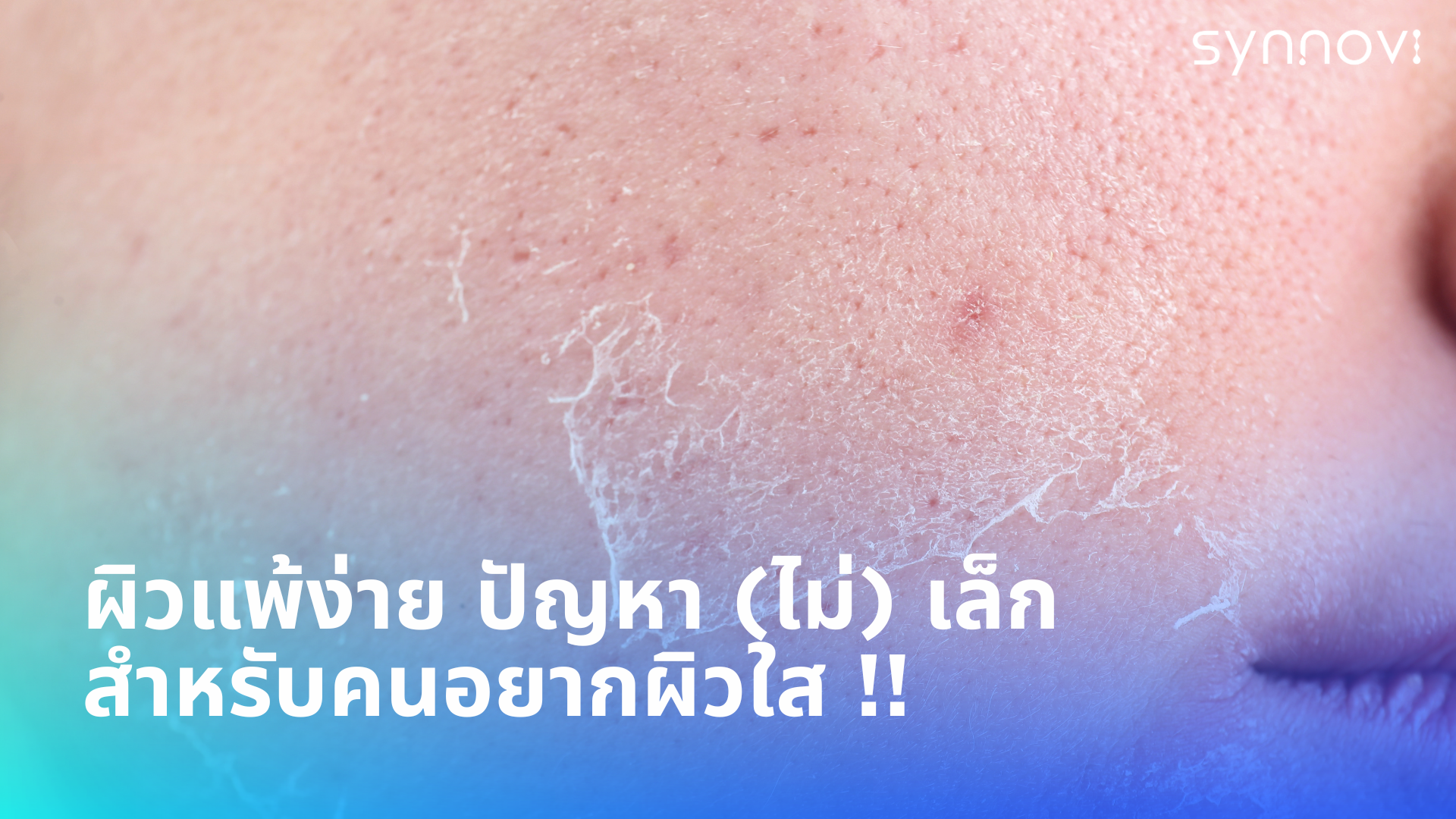
หากมีโรคผิวหนังอื่นร่วม เช่น atopic dermatitis และโรคผิวหนังอักเสบชนิดอื่น ๆ เช่น acne, rosacea, seborrheic dermatitis, contact dermatitis, psoriasis มักส่งผลให้มีภาวะผิวแพ้ง่ายได้ด้วย เนื่องจากโรคผิวหนังที่กล่าวมานี้ มักทำให้เกราะปกป้องผิวอ่อนแอ และเกิดกระบวนการอักเสบของผิว โดยในผู้ป่วยที่โรคผิวหนังร่วมเหล่านี้ จะแสดงอาการที่เห็นได้ชัด เช่น รอยแดง ผิวแห้งลอก และ ผื่นผิวหนังอักเสบ เป็นต้น (Dupont et al., 2013; Duarte et al., 2017)
อุณหภูมิต่ำ ความชื้น ลม ความร้อน และการสัมผัสกับแสงแดด มักกระตุ้นให้เกิดภาวะผิวแพ้ง่าย นอกจากนี้ มลภาวะยังเป็นหนึ่งในปัจจัยกระตุ้นที่ทำให้ผิวเกิดการอักเสบและบอบบางตามมาได้ (Duarte et al., 2017)
ผลิตภัณฑ์เครื่องสำอางถือเป็น ปัจจัยกระตุ้นที่สำคัญของภาวะผิวแพ้ง่าย ไม่ว่าจะเกิดจากการใช้ในปริมาณมากเกินไป การใช้ผลิตภัณฑ์ที่มีส่วนผสมของสารก่อระคายเคืองในสูตรตำรับ เช่น alpha-hydroxy acids, propylene glycol, alcohol, fragrances เป็นต้น
ผลิตภัณฑ์เครื่องสำอางสำหรับผิวแพ้ง่าย ควรมีการควบคุมค่าความเป็นกรดด่างที่เหมาะสมกับผิวหนัง โดยมีค่า pH 5.5 เนื่องจากจะส่งเสริมเกราะป้องกันผิวแข็งแรงและคงความชุ่มชื้นให้กับผิวหนัง แต่หากผลิตภัณฑ์มีส่วนผสมที่ทำลายเกราะป้องกันผิว หรือเปลี่ยนแปลงค่าความเป็นกรดด่างของผิว จะส่งผลให้สารต่างๆ ซึมผ่านเข้าสู่ผิวหนังได้ง่ายขึ้น และนำไปสู่การอักเสบของผิวตามมา (Duarte et al., 2017)
พฤติกรรมการดำเนินการชีวิต การรักษาความสะอาด การเลือกรับประทานอาหาร ความเครียด การสัมผัสกับสารเคมีในชีวิตประจำวัน ย่อมส่งผลต่อสุขภาพร่างกาย และสุขภาพผิวหนัง (Duarte et al., 2017; Chen et al., 2024)
เอกสารอ้างอิง
Fan L, He C, Jiang L, Bi Y, Dong Y, Jia Y. Brief analysis of causes of sensitive skin and advances in evaluation of anti-allergic activity of cosmetic products. Int J Cosmet Sci. 2016; 3 8(2): 120-7.
Berardesca E, Farage M, Maibach H. Sensitive skin: an overview. Int J Cosmet Sci. 2013; 35(1): 2-8.
Chen, B.; Tang, H.; Liu, Z.; Qiao, K.; Chen, X.; Liu, S.; Pan, N.; Chen, T.; Liu, Z. Mechanisms of Sensitive Skin and the Soothing Effects of Active Compounds: A Review. Cosmetics 2024, 11, 190.
Duarte I, Silveira JEPS, Hafner MFS, Toyota R, Pedroso DMM. Sensitive skin: review of an ascending concept. An Bras Dermatol. 2017; 92(4): 521-525.
Bodó, E.; Kovács, I.; Telek, A.; Varga, A.; Paus, R.; Kovács, L.; Bíró, T. Vanilloid receptor-1 (VR1) is widely expressed on various epithelial and mesenchymal cell types of human skin. J. Investig. Dermatol. 2004, 123, 410–413.
Itsekson A, Lazarov A, Cordoba M, Zeitune M, Abraham D, Seidman DS. Premenstrual syndrome and associated skin diseases related to hypersensitivity to female sex hormones. J Reprod Med. 2004; 49(3): 195-9.
Farage MA, Katsarou A, Maibach HI. Sensitive skin. Sensory, clinical, and physiological factors. In: Borel AO, Paye M, Maibach HI, editors. Handbook of Cosmetic Science and Technology. 4th ed. Boca Raton : CRC Press/Taylor & Francis Group, cop. 2014. p.59-69.
Dupont E, Gomez J, Bilodeau D. The two faces of skin erythema: sensitive skin and rosácea. Body Care Grooming, Protection e Hygiene. H&PC Today. 2013; 8: 12-14. (2013).
Lev-Tov H, Maibach HI. The sensitive skin syndrome. Indian J Dermatol. 2012;57(6):419-423.
Kim SJ, Lim SU, Won YH, An SS, Lee EY, Moon SJ, Kim J. The perception threshold measurement can be a useful tool for evaluation of sensitive skin. Int J Cosmet Sci. 2008;30:333-337.
Poomanee, W., Yaowiwat, N., Pattarachaidaecharuch, T., Leelapornpisid P. Optimized multiherbal combination and in vivo anti-skin aging potential: a randomized double blind placebo controlled study. Sci Rep 13, 5633 (2023).
Johansen JD, Aalto-Korte K, Agner T, Andersen KE, Bircher A, Bruze M, et al. European Society of Contact Dermatitis guideline for diagnostic patchtesting—Recommendations on best practice. Contact Dermatitis 73, 195–221 (2015).
Farage MA, Maibach HI, Andersen KE, Lachapelle JM, Kern P, Ryan C, et al. Historical perspective on the use of visual grading scales in evaluating skin irritation and sensitization. Contact. Derm.65(2), 65–75 (2011).
Kerscher, M, Buntrock, H. (2017). Treatments for Sensitive Skin. In: Honari G. Andersen RM. Maibach HI (ed.) Sensitive Skin Syndrome, Second Edition.
Nicholson, P.J., D. Dlewellyn and J.S. English. 2010. “Evidence-based guidelines for the prevention, identification and management of occupational contact dermatitis and urticaria.” Contact Dermatitis 63(4): 177-186.
Jeong S, Lee SH, Park BD, Wu Y, Man G, Man MQ. Comparison of the Efficacy of Atopalm® Multi-Lamellar Emulsion Cream and Physiogel® Intensive Cream in Improving Epidermal Permeability Barrier in Sensitive Skin. Dermatol Ther (Heidelb). 2016; 6(1): 47-56.
Varma, S.R.; Sivaprakasam, T.O.; Arumugam, I.; Dilip, N.; Raghuraman, M.; Pavan, K.B.; Rafiq, M.; Paramesh, R. In vitro anti-inflammatory and skin protective properties of Virgin coconut oil. J. Tradit. Complement. Med. 2019, 9, 5–14.
Qu, W.J. Application of hyaluronic acid in skin care. China Cosmet. Rev. 2020, 08, 94–97.
Lee, Y.I.; Lee, S.G.; Kim, J.; Choi, S.; Jung, I.; Lee, J.H. Proteoglycan Combined with Hyaluronic Acid and Hydrolyzed Collagen Restores the Skin Barrier in Mild Atopic Dermatitis and Dry, Eczema-Prone Skin: A Pilot Study. Int. J. Mol. Sci. 2021, 22, 10189.
Wahedi, H.M.; Jeong, M.; Chae, J.K.; Do, S.G.; Yoon, H.; Kim, S.Y. Aloesin from Aloe vera accelerates skin wound healing by modulating MAPK/Rho and Smad signaling pathways in vitro and in vivo. Phytomedicine 2017, 28, 19-26.
Kamatou GPP, Viljoen AM. A Review of the Application and Pharmacological Properties of α-Bisabolol and α-Bisabolol-Rich Oils. J Am Oil Chem Soc 2010; 87: 1–7.
Ren C, Ma Y, Wang Y, Luo D, Hong Y, Zhang X, et al. Palmitoylethanolamide-Incorporated Elastic Nano-Liposomes for Enhanced Transdermal Delivery and Anti-Inflammation. Pharmaceutics. 2024 Jun 29;16(7):876.
D’Agostino G., Russo R., Avagliano C., Cristiano C., Meli R., Calignano A. Palmitoylethanolamide Protects against the Amyloid-Β25-35-Induced Learning and Memory Impairment in Mice, an Experimental Model of Alzheimer Disease. Neuropsychopharmacology. 2012;37:1784–1792.
Ferreira MS, Sousa Lobo JM, Almeida IF. Sensitive skin: Active ingredients on the spotlight. Int J Cosmet Sci. 2022;44(1):56-73.
Boo, Y. C. (2021). Mechanistic Basis and Clinical Evidence for the Applications of Nicotinamide (Niacinamide) to Control Skin Aging and Pigmentation. Antioxidants, 10(8), 1315.
